
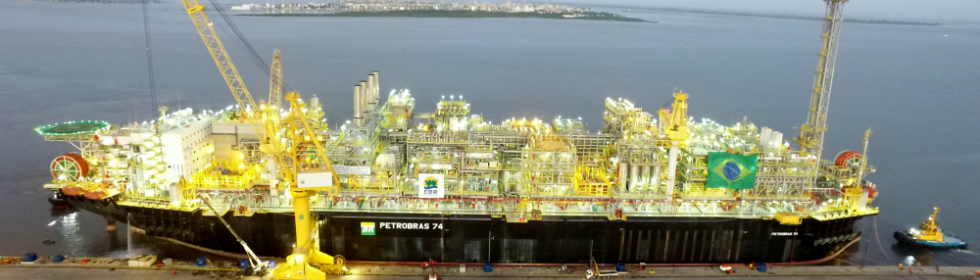
Along with shifting the exploration of oil fields from onshore to offshore, from shallow water to deep water, Floating Production, Storage and Offloading (FPSO) unit has increased over the years due to its high adaptability to ultra-deep water exploration. FPSO is typically equipped with crude oil and gas production facilities on the deck (frequently called "Topsides") and crude oil tanks in the hull, and can move to targeted offshore field.
Features of FPSO Construction
Crude oil is produced by separating water and gas from the well fluid extracted from offshore oil fields at water depths of 2,000 to 3,000 meters. The associated gas released during crude oil extraction is partly used for gas turbine power generation on the FPSO and the remainder is pressurized with compressors and reinjected into the reservoir along with water to enhance oil recovery. When there is an offshore gas pipeline nearby, the line is connected to FPSO and the gas is sent to the shore and used at power stations and other facilities.
As FPSO is a floating vessel, the topside facilities must be designed to accommodate wave-induced motion, which differs from onshore facilities. The topside facilities are assembled in units of independent blocks called modules. These modules are designed using advanced 3D-CAD systems to account for FPSO-specific conditions such as limited installation space, weight reduction requirements, and potential distortions during heavy-lift operations. The modules are constructed onshore as blocks enabling parallel progress with hull construction or conversion, thereby shortening the overall FPSO construction schedule.
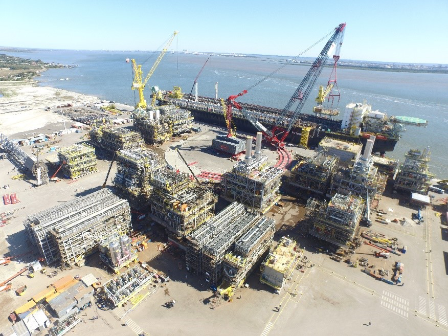 FPSO construction
Project Experience and Global Execution Capabilities
Between 2005 and 2022, TOYO was engaged in the development of FPSO topside facilities. For the FPSO operating at the Stybarrow subsea oil field offshore Australia, TOYO handled engineering, procurement, and module fabrication management. In the FPSO P-74 project for Petrobras offshore Brazil, TOYO executed a full turnkey scope, including engineering, procurement, module fabrication, and topside facilities installation. Including projects limited to module fabrication, TOYO completed 16 FPSO-related projects by 2022.
In August 2022, building on the expertise and trust earned through these achievements, TOYO and MODEC, Inc. established a joint venture, Offshore Frontier Solutions Pte. Ltd. (OFS), in Singapore. OFS is now responsible for executing EPCI (Engineering, Procurement, Construction, and Installation) projects covering both FPSO topside facilities and hulls. In 2023, OFS secured two major EPCI contracts: the Uaru project offshore Guyana and the Raia project offshore Brazil, both progressing smoothly. To enhance its global execution capabilities OFS Malaysia was launched in May 2024 followed by OFS India in August 2024, establishing a robust global network for FPSO project execution.
In 2025, OFS has secured two additional large-scale projects: the Gato do Mato-Orca project offshore Brazil and the Hammerhead project offshore Guyana. With continuous project wins, TOYO aims to stabilize its revenue base and contribute to the global offshore energy industry’s advancement.
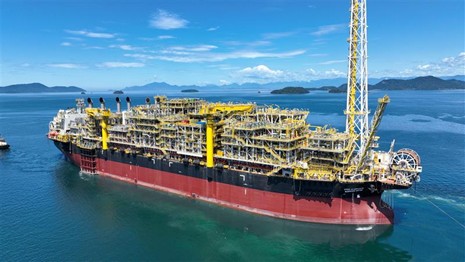
FPSO Almirante Barroso MV32, for Petróleo Brasileiro S.A. (Petrobras)*
* TOYO contributes to part of the module scope.
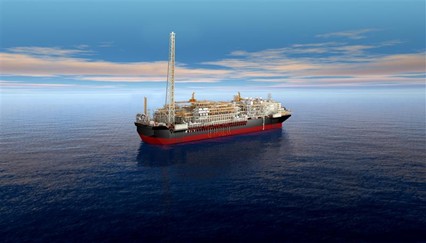
FPSO Errea Wittu (UARU), for ExxonMobil Guyana
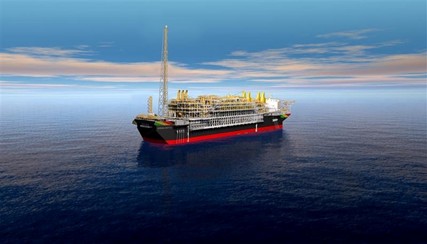
FPSO Raia, for Equinor Brasil Energia Ltda